Creosote is the dark, tarry residue wood smoke leaves inside your flue, and it’s the main culprit behind chimney fires. The good news? You don’t need a chemistry degree to keep your hearth in check. You just need to understand what causes the buildup, how to slow it down, and when it’s time to sweep your worries away - literally.
What Is Creosote? How Does Creosote Form?
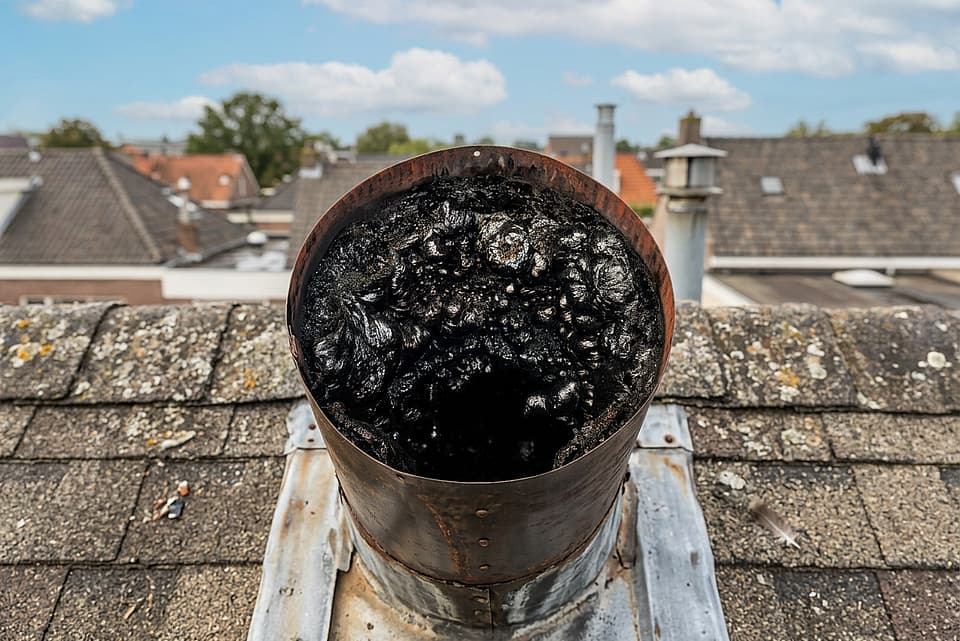
Every wood fire sends smoke up the chimney. As that smoke cools against the liner, some of it condenses. That condensed residue is creosote. It can show up as dry soot flakes, a sticky tar, or a hard shiny glaze. Same family of buildup - different stages.
The Three Stages of Creosote
- Stage 1 (Soot): A fine, dry, flaky black ash that coats the flue during normal wood burning. It carries a low fire risk and is easily swept away using a standard wire chimney brush during your annual chimney sweeping.
- Stage 2 (Crunchy or Tar-Like): Black, hardened flakes or sticky drops that look like crispy popcorn. It restricts chimney airflow, elevates fire risk, and requires heavy-duty scrapers, chemical treatments, or rotary tools to remove.
- Stage 3 (Glazed Creosote): A thick, shiny, rock-hard black glaze melted directly onto the chimney walls. This stage is extremely flammable and can be severe enough to cause catastrophic house fires. It requires professional chemical treatments or complete liner replacement.
A wood-burning fireplace and a wood stove both creosote, but gas fireplaces and gas log sets burn cleaner - and therefore won't produce creosote the way a wood fire does. That said, they still need service for venting and connections. If the fuel is wood, creosote is the residue we are talking about.
Why Is Creosote Build Dangerous?
Creosote is highly combustible. A glazed layer on the liner can ignite and turn an ordinary fire into a chimney fire in a hurry. In addition, heavy buildup narrows the flue, which weakens draft and makes your fires less efficiency - and more smoky.
- Glaze that can ignite inside the flue
- A tighter opening, so the draft struggles
- Smoke pushed back into the living room
- Soot flakes and that lingering campfire smell
If you're dealing with a smoky living space, creosote could be the culprit behind it. Be sure to book an inspection and sweeping right away, so we can get to the bottom of the issue and ensure your system is working safely and efficiently.
"If you're dealing with a smoky living space, creosote could be the culprit behind it."
Can I Prevent Creosote From Building Up?
Creosote is an inevitable byproduct of burning wood - you cannot prevent it entirely. That said, you can significantly slow its buildup by managing how and what you burn.
The main factors that accelerate this buildup include:
- Burning wet or unseasoned wood: Firewood with high moisture content (>20%) wastes energy evaporating water instead of generating heat. This creates cool, tar-laden smoke that easily sticks to the flue.
- Cool flue temperatures: Cold chimney walls (especially on exterior brick chimneys or uninsulated flues) cause warm smoke to condense rapidly, similar to water droplets forming on a glass of iced tea.
- Restricted airflow or smoldering fires: Closing dampers too far or choking air supply starves the fire of oxygen. This leads to incomplete combustion, producing far more unburnt byproduct.
- Oversized or improperly sized chimneys: Flues that are too large relative to the fireplace or stove cause smoke to expand, slow down, and cool off before it can safely exit the top.
To keep buildup to a minimum, always burn clean, fully seasoned firewood (seasoned at least 6–12 months with <20% moisture), maintain hot, well-oxygenated fires with open dampers, and schedule an annual chimney sweep to remove any lingering soot before it can harden into dangerous glaze.
How Can I Prevent a Chimney Fire?
Have the chimney inspected before you lean on it for the season, and swept when buildup is actually there. Once a year, before burning season, lines up with CSIA and NFPA 211 guidance for residential chimneys, even if you rarely light a fire. If you burn several nights a week, or you already see smoke, odor, or staining, sooner is the better call.
Garden State Chimney is a CSIA Certified Chimney Sweep and an NFI Master Hearth Professional for gas, pellet, and wood. A chimney cleaning and inspection removes creosote, soot, debris, leaves, and animal obstructions, then tells you what the flue actually looks like.
If the liner is cracked or missing, a chimney relining conversation will be in order - ask us what options would work best for your household.
Ready to clear your flue and ensure your system is safe for use?
We answer the phone.